Math&Music, beautifully intertwined #MatheMusician

Maths and music—two fascinating worlds that often intertwine in beautiful ways!

Mathematics provides the structure and foundation for music, with concepts like patterns, symmetry, and ratios shaping rhythms and harmonies.
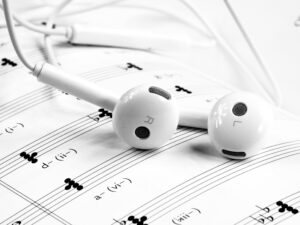
  • Frequencies: Notes in music are based on specific frequencies. The relationships between these frequencies follow mathematical ratios, creating harmonies and scales.

  • Rhythm: Time signatures and beats rely on mathematical counting. Ever tried to decipher a complex rhythm? It’s like solving a fun math puzzle!
  • Symmetry in Composition: Many classical and modern pieces use mathematical ideas like symmetry, fractals, or even Fibonacci sequences to create a sense of balance and beauty.

On the flip side, music can make mathematics come alive. From learning fractions by dividing beats to exploring algorithms through computer-generated music, it turns abstract concepts into vibrant experiences.
What fascinates you most about maths and music? Are you a mathematician, musician, or both? 🎶➗


Famous musicians who use math?


  1. Wolfgang Amadeus Mozart: He created a piece called “Musical Dice Game,” where dice rolls determined the sequence of pre-composed measures. This clever use of probability and combinations ensured the piece sounded harmonious no matter the outcome.
  2. Björk: The Icelandic artist often uses mathematical concepts in her music. For example, her album Biophilia explores themes like fractals and natural patterns, blending science, math, and art.
  3. Philip Glass: A minimalist composer, Glass uses repetitive structures and patterns in his music, which are deeply rooted in mathematical principles.
  4. Leonardo da Vinci: While more known as an artist and inventor, da Vinci applied the Golden Ratio—a mathematical concept—to create aesthetically pleasing proportions in his music and art.
  5. Brian May: The guitarist of Queen holds a PhD in astrophysics and has a strong mathematical background. His understanding of physics and math influenced his unique guitar techniques and sound.

Leave a Reply

Your email address will not be published. Required fields are marked *